
Battery guards: Mitsubishi

Protect your electric car battery pack with EV Guard's battery protector!
We produce battery protectors economically using the hi-tech lean principle, for your benefit. The costs of the battery protector have been compressed into an environmentally friendly package, with fewer recyclable electronic parts.
Frequently asked questions
Here you will find frequently asked questions and answers.
What is EV Guard battery protection?
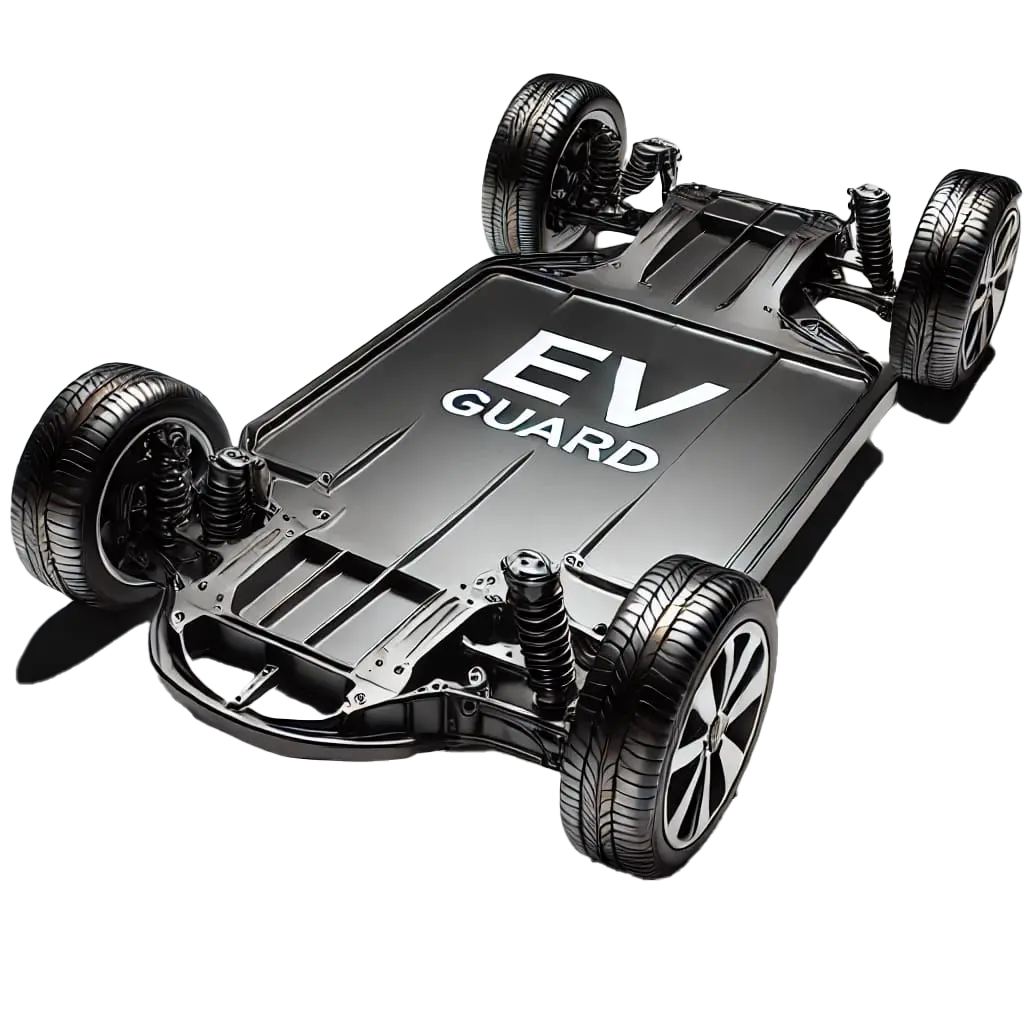
The patented battery shield protects the battery pack located beneath electric and hybrid vehicles, as well as the associated coolant and electrical connectors.
The shield is made of 3 mm thick marine‑grade aluminium topped with an 8 mm composite panel. The installation reduces ground clearance by 11 mm.
The composite panel has a honeycomb structure, manufactured partly from recycled PET plastic and polyester. Its purpose is to distribute impact energy over a wide area, thereby preventing damage to the battery casing. The panel is non‑absorbent and also serves as a thermal insulator, protecting the battery from the cooling effect of cold weather and airflow.
The optimal battery temperature during use and charging is 20–25 °C. The battery’s BMS (Battery Management System) and liquid cooling continuously ensure that the temperature does not rise excessively, even under hard acceleration or fast charging. Therefore, Finland’s occasional hot summer days are not a problem for those considering a battery shield.
The shield is made of 3 mm thick marine‑grade aluminium topped with an 8 mm composite panel. The installation reduces ground clearance by 11 mm.
The composite panel has a honeycomb structure, manufactured partly from recycled PET plastic and polyester. Its purpose is to distribute impact energy over a wide area, thereby preventing damage to the battery casing. The panel is non‑absorbent and also serves as a thermal insulator, protecting the battery from the cooling effect of cold weather and airflow.
The optimal battery temperature during use and charging is 20–25 °C. The battery’s BMS (Battery Management System) and liquid cooling continuously ensure that the temperature does not rise excessively, even under hard acceleration or fast charging. Therefore, Finland’s occasional hot summer days are not a problem for those considering a battery shield.
How does battery protection affect the yearly car inspection?
According to current regulations, vehicles must be capable of inspection without removing any parts, including the traction battery located under the vehicle.
We have been in active contact with Traficom (the Finnish Transport and Communications Agency) regarding inspection practices and have sought to influence related decisions. Traficom has instructed us that, as long as the installation and operation are reliable, the battery shield does not need to be removed for inspection.
Together with a local inspection office, we have developed a procedure that we consider sufficiently transparent. The battery shields are installed at authorized service centers, and every installation begins with the removal of the plastic covers related to the battery and a thorough cleaning of the battery and connectors. The installer inspects the condition of the battery and connectors and photographs them before installation of the shield.
The installer then fills out a condition report confirming that the battery is in proper condition. This report is kept in the car’s glove compartment for inspection purposes. Using the QR code printed on the report, the inspection engineer can access the photos showing the battery’s condition before installation.
Each battery shield also includes a type plate, which is attached during installation and affixed to the vehicle’s B‑pillar, confirming that the shield belongs to that particular vehicle.
In individual cases — for example, if the shield is dented or the required documentation is missing — the inspection engineer has the right to request removal of the battery shield for inspection. The removal can be arranged with the installing or nearby workshop.
When scheduling a vehicle inspection, it is also possible to coordinate regular maintenance and inspection with your preferred service center.
We have been in active contact with Traficom (the Finnish Transport and Communications Agency) regarding inspection practices and have sought to influence related decisions. Traficom has instructed us that, as long as the installation and operation are reliable, the battery shield does not need to be removed for inspection.
Together with a local inspection office, we have developed a procedure that we consider sufficiently transparent. The battery shields are installed at authorized service centers, and every installation begins with the removal of the plastic covers related to the battery and a thorough cleaning of the battery and connectors. The installer inspects the condition of the battery and connectors and photographs them before installation of the shield.
The installer then fills out a condition report confirming that the battery is in proper condition. This report is kept in the car’s glove compartment for inspection purposes. Using the QR code printed on the report, the inspection engineer can access the photos showing the battery’s condition before installation.
Each battery shield also includes a type plate, which is attached during installation and affixed to the vehicle’s B‑pillar, confirming that the shield belongs to that particular vehicle.
In individual cases — for example, if the shield is dented or the required documentation is missing — the inspection engineer has the right to request removal of the battery shield for inspection. The removal can be arranged with the installing or nearby workshop.
When scheduling a vehicle inspection, it is also possible to coordinate regular maintenance and inspection with your preferred service center.
Does battery protection affect the car warranty?
A battery shield can be safely installed on vehicles that still have a valid battery warranty.
Both our own testing and expert opinions confirm that the shield has only a positive effect on battery lifespan.
The 8 mm composite insulation layer reduces extreme temperature exposure — such as freezing conditions or very hot weather.
The battery’s BMS and liquid‑cooling system regulate temperature to stay within the optimal range, and our shield supports this process by reducing the impact of external temperature fluctuations, since a battery ages faster the more it is exposed to extreme conditions.
Every car manufacturer has its own warranty terms, but nearly all include a similar clause that can technically void the warranty: the manufacturer prohibits installing any spare part or accessory that is not original or approved and installed by an authorized service center.
Then again — how many people think about that when installing, for example, additional headlights?
We have been in contact with several vehicle importers and are working toward obtaining official approval for the battery shield, especially due to the northern climate and the challenges it poses for normal vehicle operation.
Manufacturers do not view this as a significant issue because the Nordic market is relatively small, but discussions with importers are ongoing, and once one understands the reasoning, others will follow.
The battery shield does not turn your car into an indestructible off‑road vehicle.
It is designed to prevent scratches and dents that may occur on, for example, bumpy cottage roads, from ice chunks falling from trucks ahead, or from contact with curbstones.
The shield is designed to protect the battery under normal driving conditions.
However, we are not responsible for any damage to the battery or electrical systems resulting from external factors.
If a battery develops warranty‑related issues unrelated to the shield, EV Guard Oy does not take a position on those claims.
Both our own testing and expert opinions confirm that the shield has only a positive effect on battery lifespan.
The 8 mm composite insulation layer reduces extreme temperature exposure — such as freezing conditions or very hot weather.
The battery’s BMS and liquid‑cooling system regulate temperature to stay within the optimal range, and our shield supports this process by reducing the impact of external temperature fluctuations, since a battery ages faster the more it is exposed to extreme conditions.
Every car manufacturer has its own warranty terms, but nearly all include a similar clause that can technically void the warranty: the manufacturer prohibits installing any spare part or accessory that is not original or approved and installed by an authorized service center.
Then again — how many people think about that when installing, for example, additional headlights?
We have been in contact with several vehicle importers and are working toward obtaining official approval for the battery shield, especially due to the northern climate and the challenges it poses for normal vehicle operation.
Manufacturers do not view this as a significant issue because the Nordic market is relatively small, but discussions with importers are ongoing, and once one understands the reasoning, others will follow.
The battery shield does not turn your car into an indestructible off‑road vehicle.
It is designed to prevent scratches and dents that may occur on, for example, bumpy cottage roads, from ice chunks falling from trucks ahead, or from contact with curbstones.
The shield is designed to protect the battery under normal driving conditions.
However, we are not responsible for any damage to the battery or electrical systems resulting from external factors.
If a battery develops warranty‑related issues unrelated to the shield, EV Guard Oy does not take a position on those claims.
How is the battery guard installed?
Installation of the battery guard always begins by cleaning the area around the battery box and, if necessary, protecting it.
The battery guard is almost always attached using the same bolts that hold the battery in place. Some of the battery’s mounting bolts are removed, and the guard is installed underneath those same bolts.
No modifications are made to the vehicle or the battery. In some cases, plastic or cardboard covers around the battery may need slight trimming for better fit and sealing, but they will still remain suitable for reinstallation even if the guard is later permanently removed.
The battery guard is almost always attached using the same bolts that hold the battery in place. Some of the battery’s mounting bolts are removed, and the guard is installed underneath those same bolts.
No modifications are made to the vehicle or the battery. In some cases, plastic or cardboard covers around the battery may need slight trimming for better fit and sealing, but they will still remain suitable for reinstallation even if the guard is later permanently removed.
Does battery protection affect car insurance?
We have been in contact with insurance company representatives and discussed the impact of battery protection on the reduction in batteries to be replaced, and therefore new, more affordable insurance products are coming, please ask your insurance company.
Where can I buy a battery guard?
We primarily deliver battery guards to service shops directly, inquire about the products from your own service shop or car dealer. Battery guards make your driving even more affordable and safer.